
Porch Staining & Sealing
Wood left unsealed doesn't survive a Buffalo winter for long. A proper stain and seal job protects your porch from freeze-thaw, road salt, and summer UV before damage sets in.
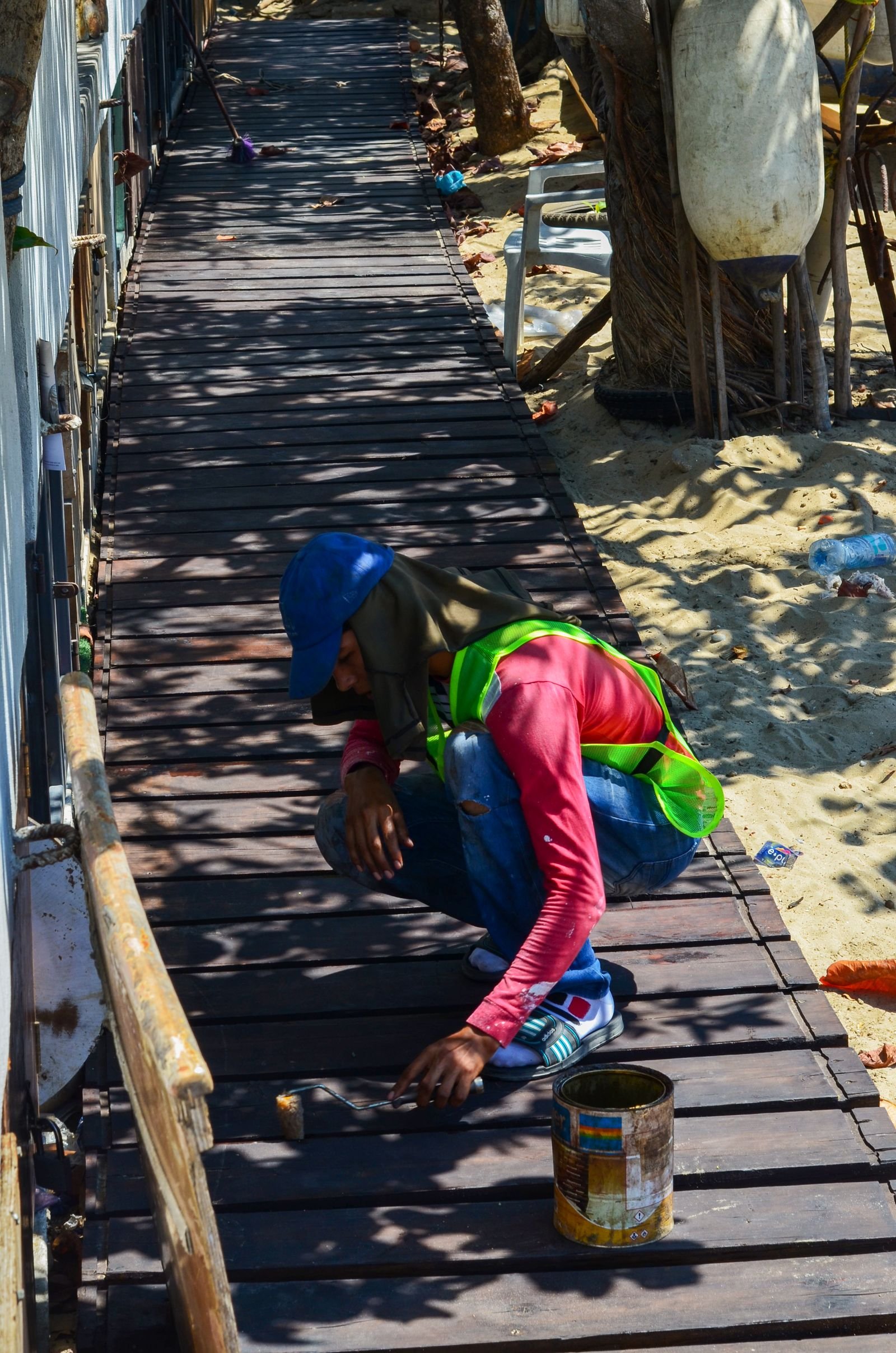
What's included
We clean the wood and treat any mildew or algae growth before applying any stain, so the finish actually bonds.
Rough or splintered areas are sanded and any raised nail or screw heads are countersunk before finishing.
We test the wood's moisture level before sealing, since stain applied to damp wood fails early and traps moisture inside.
We recommend an oil- or water-based penetrating stain suited to foot traffic on floors versus lighter coverage on railings.
Gaps where trim boards meet are caulked to keep water from working its way into joints over winter.
Railings, spindles, and other detail work get the same careful coverage as the main deck and floor surfaces.
Materials
Solid color stain hides more wear and lasts longer on high-traffic floors, while a semi-transparent oil stain keeps the wood grain visible on railings and trim.
From first call to done right.
Wash and prep
We clean the wood surfaces and treat any mildew, then let everything dry to the right moisture level.
Repair minor issues
Small splits, popped fasteners, or rough spots are addressed before staining so the finish goes on smooth.
Stain and seal application
We apply the chosen stain and sealant evenly across floor, railings, and trim, working in sections to avoid lap marks.
Final inspection and cure guidance
We check coverage across every surface and walk you through how long to keep foot traffic off before it's fully cured.
Porch Staining & Sealing FAQs
How often does a porch need to be restained in this climate?
Most porch floors need restaining every two to three years given our freeze-thaw cycles and salt exposure, while less-trafficked railings and trim can often go three to five.
What's the best time of year to stain a porch in Western New York?
Late spring through early fall gives the most reliable drying and curing conditions, since stain needs consistent dry, moderate temperatures to set properly.
Should I choose solid stain or a semi-transparent stain?
Solid stain holds up longer under foot traffic and hides wear better, while semi-transparent stain keeps more of the natural wood grain visible, mainly a look-versus-durability tradeoff.
How long before I can walk on the porch after staining?
Light foot traffic is usually fine after 24 to 48 hours, but we recommend keeping furniture and heavy use off for closer to a week so the finish fully cures.
More porches services
Start with a free estimate.
On-site visit, written quote, usually within 48 hours.