Knowing when to remove a tree comes down to seven warning signs: mushrooms at the base, a new lean, dead limbs over something you care about, trunk cracks, a thinning crown, root damage from construction, and the wrong species planted too close to the house. One sign means get it inspected. Two or more, with a roof underneath, means schedule the removal before the next storm does it for you.
A mature tree adds real value to a Western New York property, so removal should never be the first answer. But a failing tree near a house is a slow-motion insurance claim. After seventeen years of storm calls across Buffalo, Rochester and Batavia, these are the signs that move a tree from “watch it” to “schedule it.”
Key takeaways
- Mushrooms at the base almost always mean internal rot you cannot see from the outside.
- Change is the warning. A lean that was always there is fine. A lean that appeared this year is not.
- Targets matter more than the tree. Deadwood over a lawn is a chore. Deadwood over a bedroom is a hazard.
- Tree removal cost in WNY typically runs from a few hundred dollars for a small ornamental to a few thousand for a large hardwood over a structure.
- If the tree is already down, skip the article and call the 24/7 line.
The 7 signs it is time to remove a tree
1. Mushrooms at the base of the tree
Fungal conks or mushrooms growing from the root flare or lower trunk usually mean decay is already well established inside. If you have ever searched “mushrooms at base of tree, should I worry,” the short answer is yes.
When we inspect, the crew lead taps the trunk with a rubber mallet and listens for the hollow thunk that confirms a rotted core, then probes the root flare. Soft, punky wood that gives way means the tree is losing the part that holds it up.
2. A new lean
Trees can grow leaning and be perfectly stable for a century. What matters is change. A lean that appeared after a storm, or soil lifting and cracking on the side opposite the lean, means the roots are letting go. That is a same-week call, not a spring project.
We check the ground on the tension side for heaving, look for exposed roots, and sight the trunk against a fixed point like the corner of the garage. An old photo from the same angle settles the question fast.
3. Deadwood over targets
Every mature tree carries some deadwood. The question is what is under it. Dead limbs over a roof, driveway, play set or sidewalk are called widow-makers in our trade for an honest reason, and they shed in the first heavy, wet lake-effect snow. A few dead branches on a healthy tree is a tree trimming and pruning job. A third of the crown dead is one of the clearest signs a tree is dying.
4. Trunk cracks and included bark
Vertical cracks in the trunk, or twin leaders squeezing a seam of bark between them, are structural faults. Included bark forms when two stems grow together at a tight V and the bark gets trapped in the union instead of fusing. The joint looks solid and is not. Cabling can buy years on a valuable tree. On a declining one, it just delays the inevitable at added cost.
5. A thinning crown
Compare this summer to the photos on your phone from three years ago. A crown thinning from the top down, with bare tips, undersized leaves and early fall color, is a tree telling you its root system is failing. The highest branches are the first to lose water when roots cannot keep up.
6. Construction damage
Trenching, grade changes or a new driveway inside the drip line cut roots you never see. The decline shows up two to four years later, which is why a tree “suddenly” dies long after the contractor left. If you added a patio, sewer line or pool near a big tree recently, watch it. The International Society of Arboriculture’s homeowner site, Trees Are Good, explains how root loss during construction plays out.
7. The wrong tree, outgrowing the spot
Silver maples and willows planted a car-length from foundations in the 1980s are now three-story problems. Both grow fast, break easily, and push roots at foundations. When honest pruning can no longer keep a fast-growing species off the house, removal and a better-suited replacement is the cheaper decade. This is the most common answer to “should I remove a tree near my house.” If it is the wrong species in the wrong spot, yes.
What tree removal costs in Western New York
Small ornamentals and dead tree removal on an easy-access lot run a few hundred dollars. A large hardwood over a structure, where every limb is rigged down in pieces, can run a few thousand. Nobody can quote a tree honestly over the phone, which is why every estimate starts with a walk of the property.
| Cost driver | Why it moves the number |
|---|---|
| Height and trunk diameter | More wood to cut, rig and haul. Over 60 feet usually means lift or climbing work. |
| What is underneath | A tree over open lawn can be felled. A tree over a roof comes down in sections on ropes. |
| Access | Can the chipper and the 100 foot tracked lift reach it, or does everything get carried through a gate? |
| Condition | Dead and rotted trees are more dangerous to climb, so they take more equipment and time. |
| Stump | Grinding is quoted separately so you only pay for what you want. |
| Debris | Chipping and hauling are included in our quotes. Ask whether they are included in others. |
For a side-by-side on when pruning saves money and when it just postpones the same bill, read our guide to tree trimming vs removal cost in WNY.
Buffalo and Rochester storms: why timing matters here
Western New York trees fail in three predictable windows: wet, heavy snow in late fall while trees still hold leaves (the October 2006 storm in Buffalo is the textbook case), ice storms that load every branch, and summer thunderstorms with straight-line wind.
Buffalo’s lake plain soil is heavy clay with slow drainage. When that clay is saturated in spring or after a wet fall, root plates lose their grip and leaning trees go over in wind they would normally shrug off. Rochester sees the same pattern off Lake Ontario, with roughly 100 inches of snow a year and a long history of ice events. If you are weighing tree removal in Buffalo NY or tree removal in Rochester NY, the best time is before these windows, not after.
The National Weather Service Buffalo office publishes winter storm outlooks that give a few days of warning. A tree already on your list should be gone before the first lake-effect warning of the season. Our post on storm-proofing your trees before a Western New York winter covers the trees that are staying.
How KP handles a tree removal
You call or fill out the form, and a crew lead walks the property with you, looking at the tree, the targets under it, the access, and the health of everything nearby. If the tree is safe to keep, we tell you that and quote the pruning instead, because pruning work is work too. If it needs to go, you get a free written estimate, valid 30 days, with chipping and hauling included.
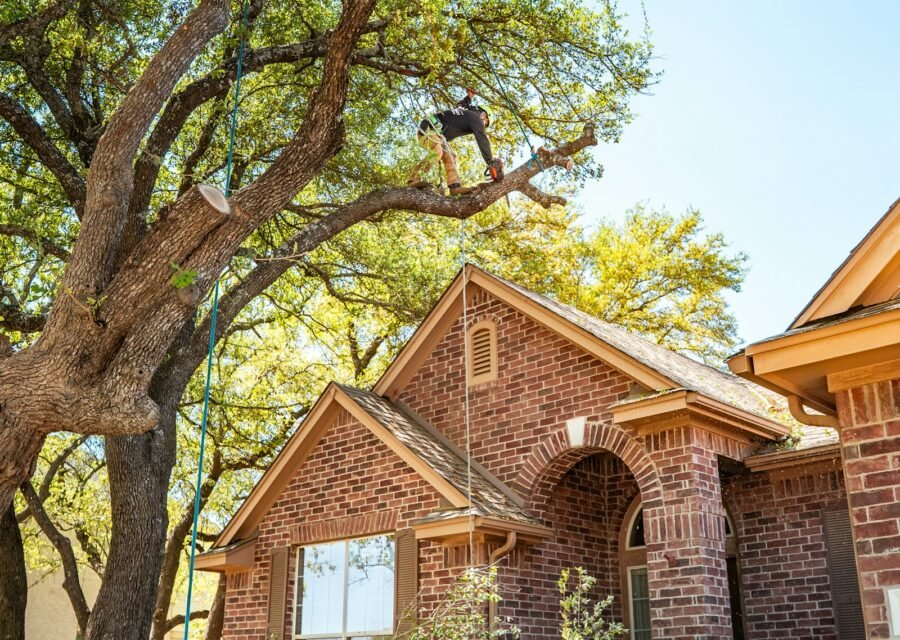
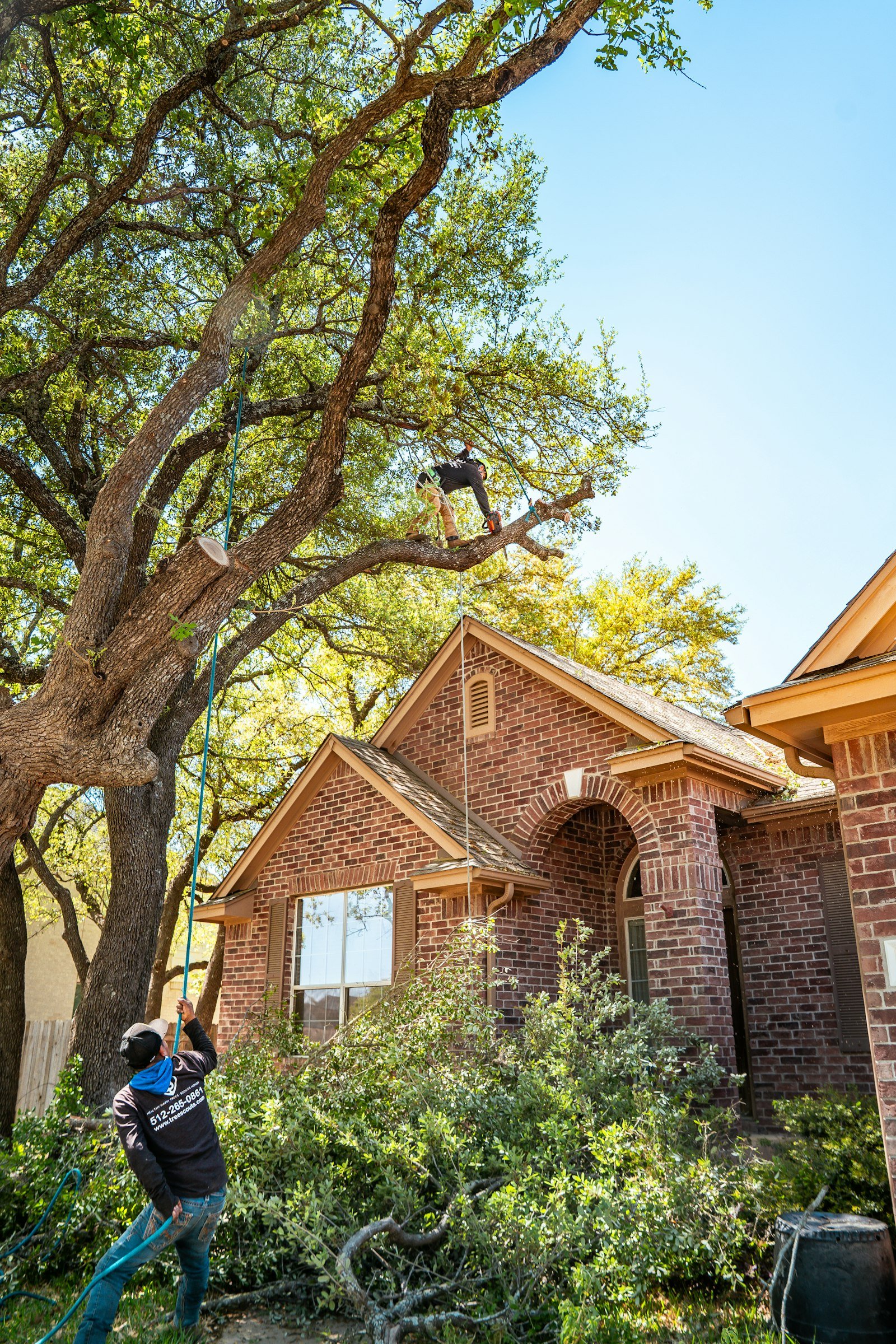
On the day, our own crew does the work, not a subcontractor. Tall or tight removals get the 100 foot tracked lift, which reaches over the house from the driveway and leaves far less lawn damage than a truck. Limbs are rigged down in sections over roofs and fences. We chip on site, cut trunk wood for firewood if you want it, rake, and walk the yard with you before we leave. Stump removal is a separate line so you can decide. We do this across Buffalo, the Erie and Niagara County towns, Rochester and Monroe County, and out to Batavia.
Frequently asked questions
How do I know if a tree is dying or just stressed?
Stress from drought or a hard winter shows as small leaves and early color across the whole tree, and it usually recovers the next year. Dying looks like dieback starting at the top, bark falling off in sheets, mushrooms at the base, or no leaves on entire limbs. Two seasons of decline in a row is the practical line. Have an arborist look before season three.
Should I remove a tree near my house?
Not automatically. Distance alone is not the problem, and a healthy oak ten feet from the house can stand for decades. The question is whether the tree is sound, whether its species is prone to failure, and what happens if it drops a limb. Fast-growing silver maples, willows and Bradford pears within reach of the roof are the ones we most often recommend replacing.
What does tree removal cost in Buffalo NY?
Typical ranges run from a few hundred dollars for a small tree with good access to a few thousand for a large tree over a house or power lines. Size, access, condition and what is underneath drive the number more than species. Every KP estimate is free and in writing, and it includes chipping and hauling. Stump grinding is quoted as a separate line.
Do I need a permit to remove a tree on my property in New York?
For a tree fully on your own lot, most Western New York towns do not require a permit, though a few villages and historic districts have rules. Trees in the municipal right of way between the sidewalk and the street belong to the city or town and need their approval. We check the location and tell you what applies before any work starts.
Can a tree with mushrooms at the base be saved?
Rarely. Conks and mushrooms on the trunk or root flare are the fruiting bodies of decay fungi already living inside the wood. By the time you see them, the structural loss is usually significant. A mushroom in the lawn near the tree is a different thing and often harmless. The crew lead can tell the difference in a few minutes with a mallet and a probe.
What happens if a tree falls during a storm?
If it is on the house, the car or the lines, call our 24/7 line and your insurer, in that order, and stay away from anything touching a wire. Most homeowner policies cover storm damage removal. Take photos for the adjuster, then let the saws go to work. Our emergency tree service handles make-safe work day or night.
Not sure which side of the line your tree is on? Call (585) 560-1134 or request a free written estimate. A crew lead will walk the property, tell you whether it is a tree removal or a pruning job, and put the number in writing.