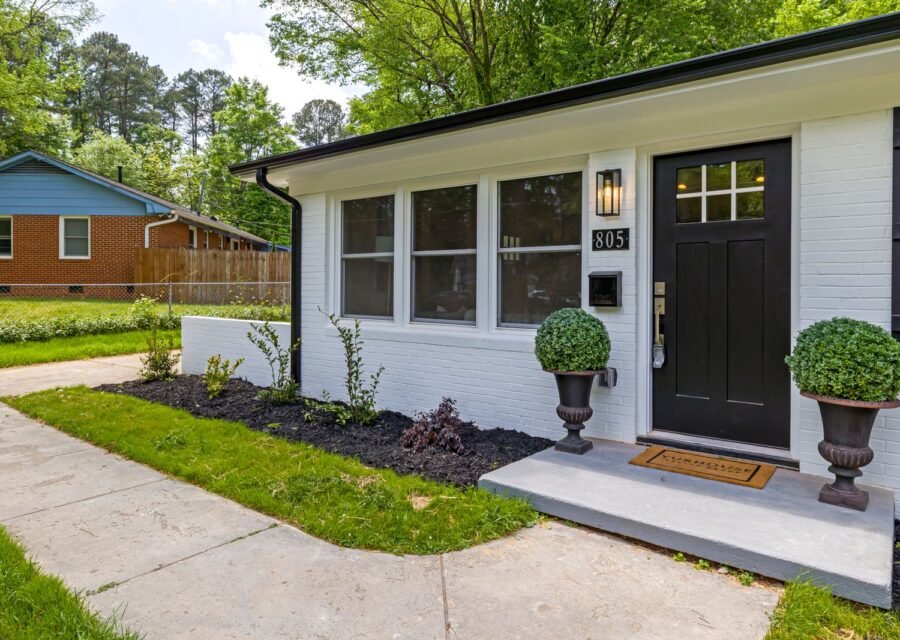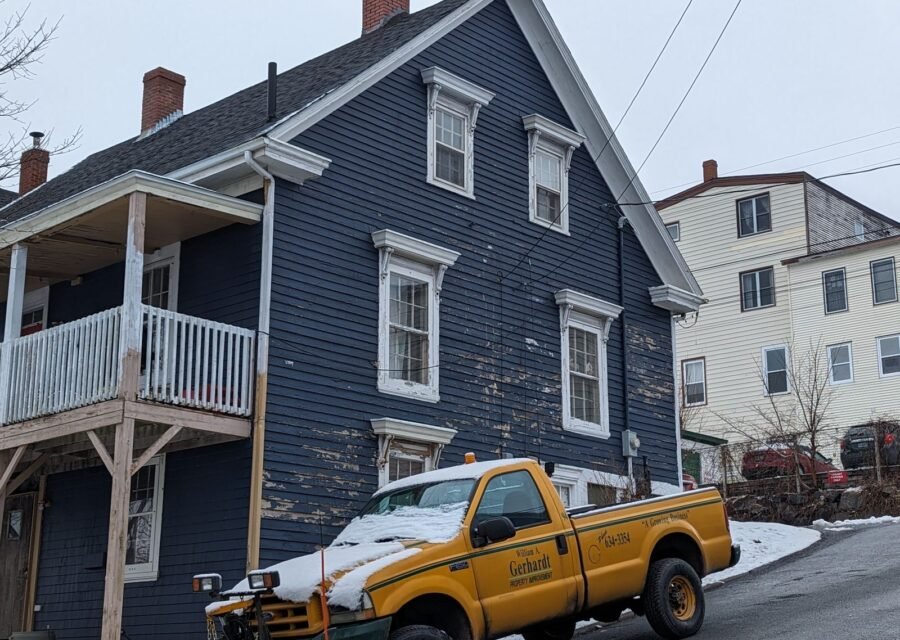
Landscaping North Buffalo yards means working with small backyards, mature maples and the 1920s to 1940s brick and frame homes that fill the blocks between Hertel Avenue, Delaware Park and the Kenmore line. The lots are a little wider than Elmwood Village and the houses a little newer, but the same rules apply: tight access, big trees over small spaces, and a driveway that has to be plowed between two garages.
Key takeaways
- Backyards are small and shaded. Mature maples decide what grows, so plant for shade and drainage first.
- Tree work is mostly pruning. Keeping a big maple healthy over a small lot beats removing it, until it is time.
- Fences sit on the line. With neighbors close on both sides, the survey and the frost depth matter.
- Driveways are long and narrow. Plowing North Buffalo means pushing snow the full length of a side drive to the back.
- North Buffalo sees less snow than the Southtowns. It still gets a Buffalo winter.
The North Buffalo lot
North Buffalo stretches from Delaware Park and the Scajaquada north to Kenmore Avenue, with Hertel Avenue as its main street and Delaware, Colvin and Elmwood Avenues running north and south through it. The side streets off Hertel and around Starin Avenue were built out mostly between the 1910s and the 1940s: brick and frame colonials, bungalows, foursquares and doubles on lots that are deeper than they are wide, with a driveway down one side and a detached garage at the back.
Along the south edge, Nottingham Terrace and the streets facing Delaware Park carry larger homes and bigger trees. Toward Kenmore the lots tighten. The whole neighborhood sits on flat lake plain clay with slow drainage, which shows up as wet backyards in April and heaved fence posts in year three. Our Buffalo service page covers the city conditions, and the Kenmore page covers the village just across the line, which shares the same housing and the same clay.
Landscaping North Buffalo backyards
The typical North Buffalo backyard is a rectangle between the house, the garage and two fences, with a mature Norway or silver maple somewhere in it or just over the line. That tree sets the conditions: shade for most of the day, a root zone that dries the soil near the trunk, and a leaf drop every October that buries the lawn.
- Plant for shade. Hostas, ferns, hydrangeas, boxwood and shade-tolerant groundcovers replace a lawn that never thickens under a maple.
- Fix the grade. Water running from the garage roof or the neighbor’s yard pools on clay. A regraded swale or a dry well keeps the patio usable.
- Beds along the fence. Edged beds along the property lines frame the yard and leave the middle open for a table or a small lawn.
- Pavers over mud. The path from the side door to the garage gets the most traffic. A paver walk or small patio solves the spring mud.
North Buffalo lawn care under big trees
Lawns here fight shade, compaction and maple roots. The small front lawns do well with a regular mowing schedule, fall overseeding and a leaf cleanup that gets the maple drop off the grass before snow. Backyards under heavy canopy often do better with a smaller lawn and larger beds than with a fight against the shade.
Our Buffalo lawn care service covers mowing, overseeding, fall cleanup and the leaf pickup that a street full of maples demands. Cornell Cooperative Extension guidance on cool-season turf in New York backs the fall timing: September overseeding and a last fertilizer application before the ground freezes.
Tree care in North Buffalo: the mature maples
The trees that line the streets and shade the backyards here are mostly maples planted when the houses were built, which puts many of them at 80 to 100 years old. Silver maples in particular grow fast, get big, and shed limbs in wet snow and wind. Norway maples hold up better but shade everything beneath them.
Pruning over a small lot
Most North Buffalo tree work is pruning: deadwood over the roof, limbs over the garage, clearance from the house and the service drop. The International Society of Arboriculture recommends a regular cycle for mature trees, and on a lot this size every limb has a target under it. Our Buffalo tree trimming and pruning service handles it, usually from the 100 foot tracked lift where the driveway allows, or by climbing where it does not.
When a maple has to come down
A silver maple with a split trunk, a hollow at the base or a lean toward the house is past pruning. Tree removal North Buffalo customers call about is almost always a backyard tree with no truck access, so it comes down in sections, rigged and lowered, with wood carried out the side yard. Winter, with frozen ground and bare branches, is the easiest season for it. Our Buffalo tree removal page covers the process.
Fence installation North Buffalo
With houses 10 to 15 feet apart, a fence here is a shared wall. Most run along the backyard lines and across the back by the garage, with a gate at the side yard.
| Fence | Typical use in North Buffalo | What we check |
|---|---|---|
| 6 foot wood or vinyl privacy | Backyard property lines | Survey pins, good side out, posts below the 42 inch frost line |
| 4 foot wood picket or aluminum | Front yards and side yards facing the street | City front yard height limits, corner sight triangles |
| Chain link | Rear lines, dog yards, budget runs | Can be dressed with plantings along the inside |
| Fence repair | Leaning 1990s fences on shallow posts | Reset posts below frost depth, replace rotted rails |
Clay heaves shallow posts. A fence set at 24 inches leans within a few winters; one set below 42 inches with a gravel base and a concrete collar stays plumb. Our Buffalo fence installation page covers materials, permits and the property line questions that come up when the neighbor’s garage sits a foot off the line.
Snow plowing North Buffalo driveways
The North Buffalo driveway is long, narrow and ends at a garage. Snow has to be pushed from the street to the back of the lot, because there is no room to stack it beside the house without burying the neighbor’s side door. Parked cars on both sides of the street and the city plow ridge at the apron complete the picture.
Here is what snow plowing North Buffalo looks like on our routes.
- 2 inch trigger. Routes run when accumulation reaches 2 inches, with return passes in long storms and a cleanup pass after.
- Snow goes to the back. Pile placement is agreed at the fall walkthrough, usually the rear of the lot or a front corner, and staked.
- Apron ridge. The ridge the city plow leaves at the street gets cleared on the cleanup pass.
- Sidewalks. The City of Buffalo requires owners to clear the public walk. It can be added to the contract.
- Routes capped by mid November. So every driveway on the list is done in a storm.
If you are searching for Buffalo snow plowing near me from a Hertel Avenue address, our Buffalo snow plowing page covers the city routes and what the contract includes.
Western New York conditions in North Buffalo
North Buffalo sits north of the heaviest Lake Erie bands, which usually set up over South Buffalo and the Southtowns. The neighborhood sees something close to the NWS Buffalo average of about 95 inches a season, well below Orchard Park or Hamburg, and often a few inches less than the airport in Cheektowaga. It is still a long winter, and with no place to put the snow on a narrow lot, the banks grow until March.
The clay underneath drains slowly and heaves what is set shallow. Fence posts, paver edges and patio bases all need to account for the 42 inch frost depth. In spring the backyards that sit lower than the neighbor’s stay wet for weeks.
How KP works a North Buffalo property
Every job starts with a free written estimate, valid 30 days. A crew lead walks the lot with you, checks the side yard access, looks at the maples over the house and the garage, finds the property pins, and for snow customers sets the pile zone and stakes the driveway. Our own crews do the work, not subcontractors, and plow damage to lawns or fences is repaired in spring.
Frequently asked questions
What grows under a big maple in a North Buffalo backyard?
Shade-tolerant plants that handle dry, rooty soil: hostas, ferns, hydrangeas, boxwood, pachysandra and similar groundcovers. Lawn under a mature maple stays thin no matter how often it is seeded, so most North Buffalo backyards look better with a smaller lawn, edged beds along the fences and a paver path or patio where the traffic is.
Should I remove the silver maple in my backyard?
Not unless it shows real problems: a split or included-bark fork, a hollow at the base, mushrooms on the trunk, large deadwood over the house or a new lean. A healthy silver maple can be pruned to reduce weight over the roof and keep it safe. A crew lead can look at it and tell you honestly which side of the line it is on.
How deep do fence posts need to be in Buffalo?
Below the frost line, which Erie County puts at 42 inches. On the clay in North Buffalo, posts set shallower heave a little each winter and lean within a few years. We set posts in a gravel base with a concrete collar below 42 inches so the fence stays plumb through freeze and thaw cycles.
Where does the snow go on a narrow North Buffalo driveway?
To the back of the lot, usually, or a front corner agreed before the season. Stacking snow beside the house buries the neighbor’s side door and your own basement windows, so we push it the full length of the drive. The pile location is set at the fall walkthrough and marked with stakes so every pass goes to the same place.
Do you plow in Kenmore too?
Yes. Kenmore sits directly north of North Buffalo across Kenmore Avenue, with the same 1900s to 1930s housing, the same clay and the same narrow driveways. Our routes run through both, and the Kenmore page on our site covers the village specifics, including its own sidewalk clearing expectations.
When should I schedule tree pruning in North Buffalo?
Late fall through late winter is best for maples. The tree is dormant, the branches are bare so the crew can see every defect, and the frozen ground protects the lawn from the lift. Avoid pruning maples in early spring when sap is running heavily. Dead or hanging limbs over the house should be dealt with whenever they are found.
Live off Hertel? Call (585) 560-1134 or request a free written estimate and a crew lead will walk your yard, trees, fence line and driveway with you.