
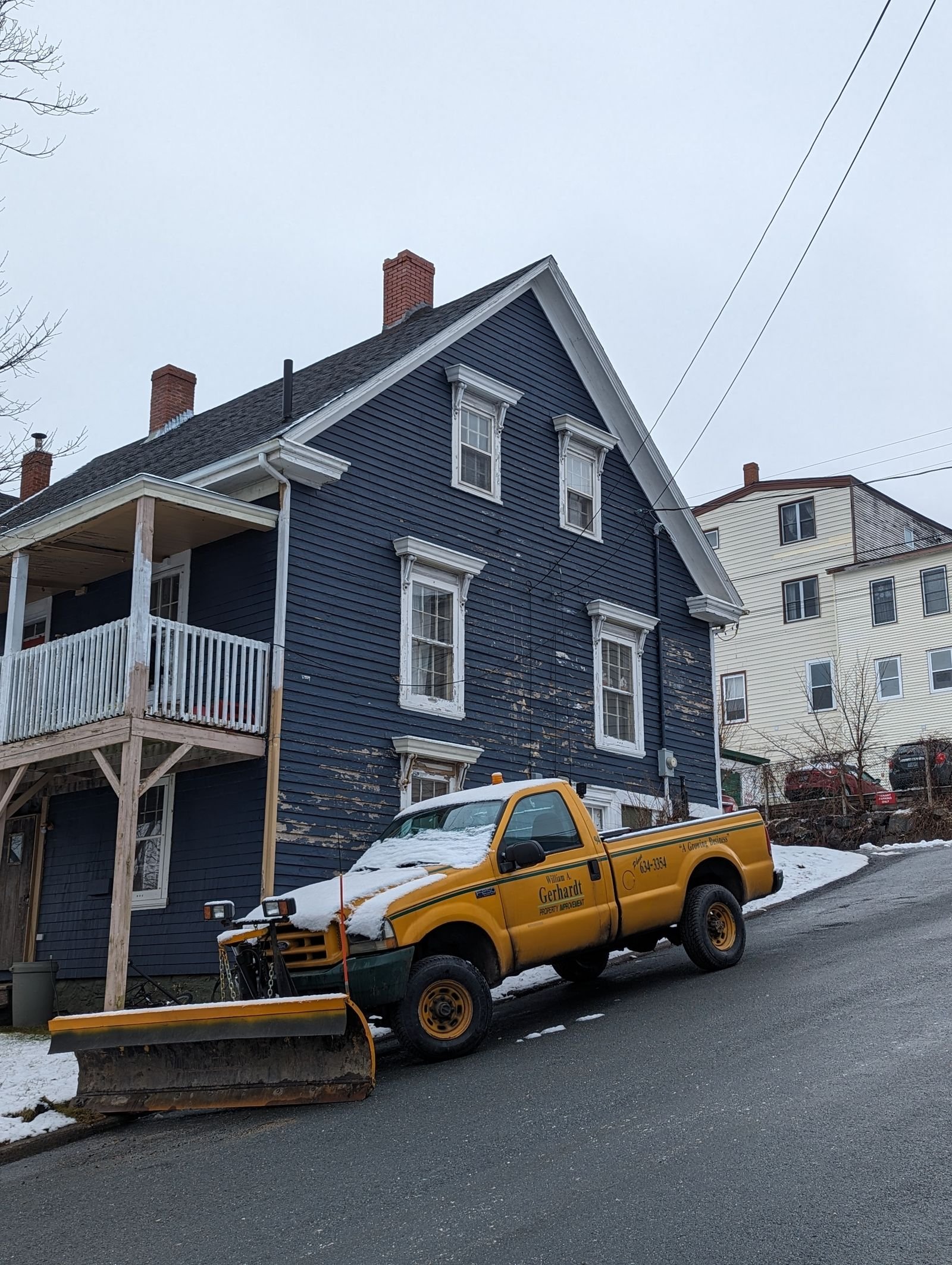
Commercial snow plowing in Buffalo NY is sold three ways: a seasonal flat rate, per-event billing, or a hybrid with a seasonal base and per-event extras for salt and hauling. For most small plazas, offices, churches, restaurants and medical practices, the seasonal contract with a defined scope is the right choice, because it fixes the budget and guarantees a place on the route. Whatever you choose, the contract needs to spell out the lot, the walks, the salt, the response time and the paperwork, and it needs to be signed by late October.
This guide is for the owner or manager who has to keep a lot open on a Tuesday morning in January.
Key takeaways
- Scope is everything. Lot, walks, entrances, salt, piles and hauling each need their own line.
- Response time should be a number, tied to a trigger depth and to your opening hours.
- Documentation protects you in a slip-and-fall claim. Ask how every visit is logged.
- Seasonal contracts fix the budget; per-event contracts fix nothing in a 120 inch winter.
- Sign by late October. Commercial routes fill before residential ones.
Commercial snow contract types compared
| Contract type | How it bills | Best for | Watch out for |
|---|---|---|---|
| Seasonal flat rate | One price, November through April, often in monthly installments | Any business that must open on time regardless of weather | Visit caps or a high trigger hidden in the fine print |
| Per event | Billed each time the trigger is met, with salt and walks itemized | Properties with flexible hours or seasonal closures | Costs run away in a heavy winter; you are behind seasonal clients on the route |
| Hybrid | Seasonal base for plowing, per-event for salt, hauling and extra passes | Lots where salt use varies a lot by storm | Make sure the per-event items have unit prices in writing |
| Multi-year | Seasonal pricing locked for two or three winters | Owners who want budget certainty and a guaranteed route spot | Confirm an exit clause for non-performance |
What the scope of a commercial snow contract should cover
The lot
Parking lot plowing is the core. The contract should state the trigger depth (2 inches is standard), where piles go, and whether drive lanes and entrances are cleared first on big storms. Piles in the wrong corner block sight lines at the exit, melt across the lot and refreeze, and eat parking spaces by February.
Walks and entrances
Sidewalks, entry pads, ramps and the path to the dumpster are hand or small-machine work, priced separately. The City of Buffalo requires property owners to clear public sidewalks promptly after snowfall, and your customers and staff use the private walks before the lot. Our post on sidewalk snow removal and slip-and-fall liability in Buffalo covers what the city expects and how to document it.
Salt and ice management
Snow and ice management in Buffalo is at least half ice. Freeze and thaw cycles, refreeze after a sunny afternoon, and freezing rain on top of plowed pavement all put salt on the invoice. The contract should say whether salting is automatic after every plow, on request, or triggered by conditions, and it should give a unit price per application.
Hauling and relocation
By mid January on a small lot, piles can take a third of the spaces. Relocating piles within the property or hauling them off site is a separate service with its own price. Decide in October whether you want it available and at what point you will call for it.
For a deeper look at lot layout, pile placement and salt choices, see parking lot snow removal for Buffalo businesses.
Response times and opening hours
Residential customers want the driveway clear before 7am. Commercial customers need the lot clear before their first employee, delivery or patient arrives, and that varies: 5am for a restaurant doing breakfast, 7am for a medical office, Sunday morning for a church. The contract should name your opening time and commit to a clearing window in front of it.
On a multi-day lake-effect event, one pass is not enough. Ask how return passes are handled, whether there is a limit, and how the contractor prioritizes when every property on the route needs service at once. Snow plowing for businesses is a scheduling problem as much as a plowing problem, and capped routes with backup equipment are what keep the commitment.
Documentation: the part that matters in a claim
A slip-and-fall claim in March comes down to one question: what was done to the pavement, and when? A commercial snow removal contractor should log every visit with the date, time in and out, services performed, salt applied, and conditions observed. GPS-stamped records or timestamped photos are better than a handwritten sheet.
Ask for a copy of the log format before you sign, and ask how quickly you can get records if your insurer requests them. Also request a certificate of insurance naming your business as an additional insured, and confirm the policy covers snow and ice operations specifically. Some general liability policies exclude it.
Commercial snow removal cost in Buffalo
Commercial snow removal cost is driven by lot square footage, layout complexity, walkway footage, salt expectations, opening hours and your town. A compact office lot in Amherst with one entrance is one price. A restaurant lot in Hamburg with a drive-through lane, three entrances and a 5am opening is a different price, because it sits in the snowbelt and needs more passes.
- Lot size and shape. Long, open lots plow fast. Lots broken up by islands, curbs and cart corrals take longer.
- Walkway footage. Hand work is slower than truck work and priced per visit.
- Salt. Per application, scaled to the lot. Automatic salting after every plow costs more than salting on request.
- Opening hours. Earlier opening means a tighter window and a higher route priority.
- Location. Orchard Park, Hamburg and East Aurora get 110 inches or more; Amherst and Tonawanda closer to 80 to 95. More snow means more visits.
- Hauling. Priced per event with equipment and trucking.
Compare bids on scope, not on the headline number. A cheaper seasonal price with a 3 inch trigger, no walks and no return passes is not a cheaper contract once the invoices for extras arrive.
Buffalo conditions a commercial contract has to survive
Buffalo averages about 95 inches at the official station, and the lake-effect bands that come off Lake Erie can put two feet on the Southtowns while the Northtowns get a dusting. The November 2014 storm dropped over six feet on parts of the Southtowns in a few days. The December 2022 blizzard closed the whole county, with driving bans that dictated when any contractor could move.
The National Weather Service Buffalo office issues lake-effect warnings a day or two ahead. A good contractor watches them and tells you what to expect before the storm, including whether to expect a pre-treatment or an overnight pass. The City of Buffalo publishes its sidewalk clearing rules and parking bans, which affect where piles can go on city lots.
Town matters for routing. A plaza on Transit Road in Amherst is on a different route and a different timing than a church in Orchard Park. Ask whether the contractor actually runs commercial routes in your town, not just whether they will come.
How KP handles commercial snow plowing
A crew lead walks the lot with you in October, marks pile locations, notes entrances, walks and drainage, and asks about your opening hours. You get a written contract that lists the trigger depth, the clearing window before your opening time, return-pass policy, walkway scope, salt terms with unit prices, and the per-event price for pile relocation if you want it available. Lot edges and islands are staked before the ground freezes.
Our own crews run the routes, with multiple trucks and backup equipment. Every visit is logged with time, services and conditions, and records are available to you or your insurer on request. A certificate of insurance naming your business is provided before the season starts. Commercial routes are capped and typically close by late October, ahead of residential routes. We serve Buffalo and the Erie and Niagara County towns only.
See snow plowing in Buffalo and the full snow plowing page for the town list. Property managers and associations should also read our guide to snow removal for HOAs and property managers in Buffalo.
Frequently asked questions
When should a Buffalo business sign a snow plowing contract?
By late October. Commercial routes are planned first because the clearing windows are tighter and the scope is larger, so they fill before residential routes. Signing in September or early October also gives time for a site walk, pile planning and staking before the ground freezes. Businesses calling after the first storm usually face a waitlist or per-event pricing.
What is included in a commercial snow contract?
It depends entirely on what is written. A complete contract covers the parking lot with a trigger depth and clearing window, walkways and entrances, salt with unit pricing, return passes on long storms, pile placement, optional hauling, visit logging, and a certificate of insurance. If any of those is missing, ask for it to be added before you sign.
How much does commercial snow removal cost in Buffalo?
It varies with lot size and layout, walkway footage, salt expectations, opening hours and town. A small office lot north of the snowbelt costs considerably less than a restaurant lot in Orchard Park with a 5am opening. Compare bids on scope and unit prices rather than the headline figure. We provide a written seasonal price after walking the lot.
Is a seasonal or per-event contract better for a small business?
Seasonal, for almost any business that must open on time. It fixes the budget, puts you on a route, and covers the multi-day lake-effect events where per-event billing runs up fast. Per-event suits a property with flexible hours or a winter shutdown. A hybrid, with seasonal plowing and per-event salt, works well for lots where ice is the bigger variable.
Who is liable if someone slips in my parking lot?
Generally the property owner or tenant responsible for maintenance, which is why documentation matters. A contractor’s log showing when the lot was plowed and salted, and in what conditions, is the evidence your insurer needs. Ask for a certificate of insurance naming your business as an additional insured and confirm the policy specifically covers snow and ice work.
What happens to the snow when the piles get too big?
Piles are relocated within the property or hauled off site, priced per event with the equipment and trucking involved. On small lots this usually becomes necessary by mid January in a normal winter and earlier in a heavy one. Decide in October where piles go and at what point you want relocation, so nobody is negotiating in a storm.
Need the lot open on time this winter? Call (585) 560-1134 or request a written commercial quote. A crew lead will walk the property, plan the piles and put every term in writing before routes close.